


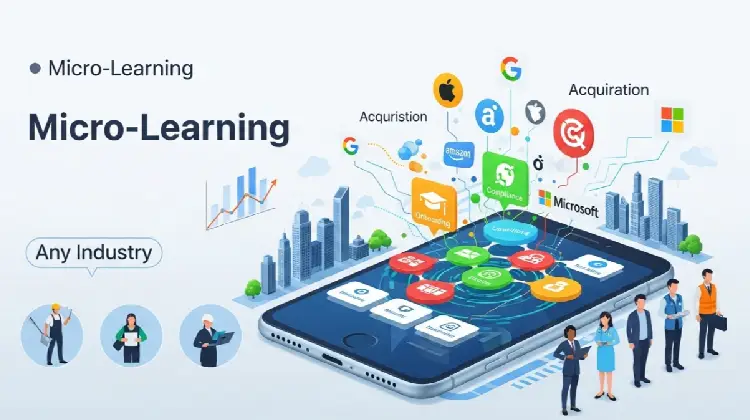

In the rapidly evolving digital landscape of 2026, short-form video has shifted from a social media trend to the backbone of global education. As learners’ attention spans become more fragmented, EdTech companies and independent creators are turning to Artificial Intelligence (AI) to transform static content into dynamic, “adaptive” learning experiences. By leveraging AI to automate production and personalize delivery, the industry is witnessing a “Netflix moment” in education—where content is not just consumed but intelligently tailored to every individual.
The Rise of “Adaptive Video” and Digital Twins
The most significant shift in 2026 is the transition from standard MP4 files to adaptive video ecosystems. Advanced AI tools now allow creators to develop “Digital Twins” or AI avatars of expert faculty. These hyper-realistic mentors can:
- Scale Expertise: A single professor can “teach” thousands of students simultaneously, delivering personalized feedback in over 40 regional languages—from Marathi to Mandarin—using real-time voice cloning.
- Contextualize Learning: Using neural rendering, a single lesson can instantly toggle between visual styles—shifting from a 3D animation for a visual learner to a text-heavy summary for a reading-focused student.
- Interactive Comprehension: AI-integrated videos now act as “Living Textbooks.” If a student fails a mid-video quiz, the AI automatically reroutes the video to a simplified explanation before allowing them to proceed.
Solving the “Speed Challenge” for Creators
For EdTech marketers, the pressure to maintain a consistent presence on platforms like YouTube Shorts and Instagram Reels is immense. Traditional production cycles often miss the narrow “trend windows” of social algorithms.
- Atomic Lessons: AI heatmapping identifies exactly where students drop off in long-form lectures. Creators then use AI to “auto-crop” these into “Atomic Lessons”—high-impact, 5-minute segments optimized for mobile discovery.
- Production Speed: Tools like Runway, Pictory, and Synthesia have reduced production time by 80%, allowing small teams to produce professional-quality, hook-driven content that would previously require a full studio.
- SEO & Discovery: Short videos are now the primary “search engines” for Gen Z. AI ensures videos are optimized for Answer-Engine Optimization (AEO), appearing as definitive answers to complex academic queries on AI-powered search platforms.
Data-Driven Success: Better Outcomes, Less Effort
The results of this AI integration are measurable. Statistics from 2025–2026 indicate that AI-personalized learning has boosted course completion rates by 70% and increased exam scores by an average of 10%. For educators, the benefits are equally profound: teachers using AI-driven workflows report saving an average of six weeks per school year, allowing them to focus on high-value mentorship rather than repetitive content creation.
“In 2026, the campus is the search engine,” says Dr. Jateen Rajput of Bhavan’s College. “By blending human imagination with AI implementation, we are turning superficial scrolling into deep, transformative learning experiences.”
Key Highlights:
- Adaptive Learning: AI now enables “adaptive videos“ that change their teaching style and language in real-time based on the learner’s specific needs and performance.
- Digital Mentors: EdTech platforms are using AI Digital Twins to scale human expertise, allowing experts to deliver personalized instruction in multiple languages 24/7.
- Micro-Learning Boom: AI identifies high-engagement moments in long lectures to automatically create “Atomic Lessons” for TikTok, Reels, and YouTube Shorts.
- Increased Efficiency: AI tools have slashed video production times by 80%, while personalization has helped increase course completion rates by up to 70%.