


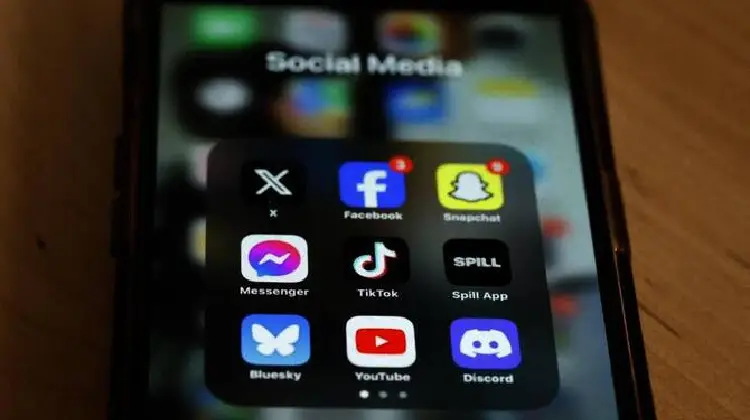

Big Tech giants are facing an unprecedented regulatory “pincer movement” as world governments move from mild oversight to outright bans on teen social media use. Following Australia’s historic enforcement of a minimum age limit of 16 for platforms like TikTok, Instagram, and X, India and the United Kingdom have now accelerated their own legislative efforts to “firewall” the digital lives of adolescents.
The Australian Precedent and the “OpenAge” Counter
Australia’s Social Media Minimum Age (SMMA) law, which came into full effect on December 10, 2025, has already forced platforms to deactivate millions of accounts. In just the first month of 2026, Meta reported removing over 544,000 underage accounts from Instagram, Facebook, and Threads to avoid fines that reach up to AUD 50 million ($33 million) per violation.
To manage these requirements, tech firms have launched the OpenAge Initiative, utilizing “AgeKeys”—new age-verification tools that use facial analysis and browsing inference to estimate a user’s age. However, critics note that tech-savvy teens are already bypassing these hurdles using VPNs and “age-spoofing” search queries.
India’s “Digital Hygiene” Crisis
In India, the debate reached a boiling point this week following the Economic Survey 2025-26, which flagged social media addiction as a national economic risk. The report warned that compulsive use among the 15–29 age group is leading to “real economic costs,” including lost productivity and a rising healthcare burden.
- New Legislation: A private member’s bill, the Social Media (Age Restrictions and Online Safety) Bill, was introduced in the Indian Parliament on January 30, 2026.
- Proposed Ban: The bill seeks to ban anyone under 16 from holding a social media account, placing the entire “onus of verification” on the companies.
- Data Sovereignty: Lawmakers have also raised alarms that Indian teens are being used as “unpaid data providers” to train foreign AI systems, reaping benefits elsewhere.
UK and US: The “Duty of Care” Deadline
The pressure is equally intense in the West. In London, the House of Lords recently voted in favor of an amendment to the Children’s Wellbeing and Schools Bill, which would mirror Australia’s under-16 ban. Meanwhile, US regulators are bracing for the April 22, 2026, compliance deadline for KOSA (Kids Online Safety Act) and COPPA 2.0. These laws will effectively extend privacy protections to teenagers aged 13–17, treating them with the same legal scrutiny as younger children for the first time.
Big Tech’s Warning
Platforms like Google and Meta argue that blanket bans are a “whack-a-mole” strategy that will drive vulnerable teens toward unregulated “darker corners” of the internet. They advocate instead for app-store level verification and enhanced parental controls. However, with global studies now linking three-plus hours of daily social media use to a 2-3x increase in suicidal ideation, policymakers seem convinced that the era of self-regulation is officially over.
Key Highlights:
- Global Bans Rising: Australia has implemented an under-16 social media ban, while India and the UK are currently debating similar legislative restrictions.
- Heavy Penalties: Tech companies face massive fines (up to $33 million in Australia) if they fail to remove underage users from their platforms.
- Mental Health Crisis: Recent 2026 data shows teen digital addiction rising from 7% to 11% globally, with significant links to anxiety and depression.
- Regulatory Deadlines: The US is approaching a major April 2026 deadline for KOSA and COPPA 2.0, which will fundamentally change how teens are marketed to online.